How the experience of abuse impacts an abused person is very difficult to predict.
Severity
It seems self-evident that some abuse is more severe than others — but there is no way to be precise about this and the business of comparing severity of trauma is notoriously risky. For example, it seems self evident that both frequency of abuse and intensity of abuse contribute to the impact:
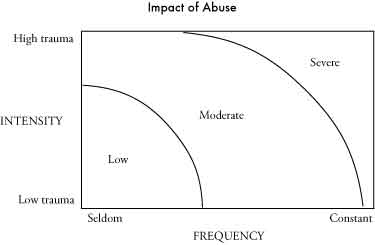
But there are risks to such generalizations. The impact of a single abusive event which might not seem like ‘high trauma’ to others can be a life-altering event to an abused person. In part this is due to the fact that there are so many other factors involved. These could include:
- duration (how long did the abusive event last?)
- extent of ritualization involved
- social meaning of abuse for the abuser
- social meaning of the abuse for the abused
- intentions of the abuser
- level of support for the abused at the time of the abuse
- response to disclosure attempts by the abused
- identity of abuser (stranger, intimate?)
- multiple simultaneous forms of abuse (sexual abuse + spiritual abuse + emotional abuse)
- developmental vulnerabilities of the abused
- response of abused to the abuse (silence or disclosure?)
- extent of on-going access of abuser to the abused
- extent of reinforcement of family dysfunction
- response of abuser to the abuse (repentance or denial?)
Diversity
The impact of abuse on the abused is also very diverse and difficult to predict. Judith Herman in Trauma and Recovery (Rivers Oram Press, 2001) lists six general categories of long term consequences from abuse. These are:
- Alterations in affect regulation, including
- persistent dysphoria
- chronic suicidal preoccupation
- self-injury
- explosive or extremely inhibited anger (may alternate)
- compulsive or extremely inhibited sexuality (may alternate)
- Alterations in consciousness, including
- amnesia or hypermnesia for traumatic events
- transient dissociative episodes
- depersonalization/derealization
- reliving experiences, either in the form of intrusive post-traumatic stress disorder symptoms or in the form of ruminative preoccupation
- Alterations in self-perception, including
- sense of helplessness or paralysis of initiative
- shame, guilt and self-blame
- sense of defilement or stigma sense of complete difference from others (may include sense of specialness, utter aloneness, belief no other person can understand, or nonhuman identity)
- Alterations in perception of perpetrator, including
- preoccupation with relationship with perpetrator (includes preoccupation with revenge)
- unrealistic attribution of total power to perpetrator (caution: victim’s assessment of power realities may be more realistic than clinician’s)
- idealization or paradoxical gratitude
- sense of special or supernatural relationship
- acceptance of belief system or rationalizations of perpetrator
- Alterations in relations with others, including
- isolation and withdrawal
- disruption in intimate relationships
- repeated search for rescuer (may alternate with isolation and withdrawal)
- persistent distrust
- repeated failures of self-protection
- Alterations in systems of meaning
- loss of sustaining faith
- sense of hopelessness and despair
It would be a mistake to see even this list as comprehensive. I can think of several other impacts of abuse which don’t fit in any of these categories.
Another very helpful categorization of the long term effects of abuse comes from Patrick Carnes in his book The Betrayal Bond: Breaking Free of Exploitive Relationships (Health Communications, 1997):
- Trauma reaction – experiencing current reactions to trauma events in the past.
- Trauma pleasure – finding pleasure in the presence of extreme danger, violence, risk or shame.
- Trauma blocking – a pattern exists to numb, block out or overwhelm feelings that stem from trauma
- Trauma splitting – ignoring traumatic realities by dissociating or splitting off experiences or parts of self
- Trauma abstinence – depriving self of things you need or deserve because of trauma
- Trauma shame – feeling unworthy and having self-hate because of trauma experience
- Trauma repetition – repeating behaviors or situations that parallel early trauma experiences.
- Trauma bonds – being connected (loyal, helpful, supportive) to people who are dangerous, shaming or exploitive.
There are many other ways to think about the impact of trauma or abuse. It is important to note that effects are not only variable but sometimes contradictory. For example, both sexual promiscuity and sexual anorexia can be symptoms of sexual abuse. Both boundary-less-ness and rigid, inflexible boundaries can be symptoms of physical abuse.
